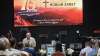


PERM – “Humility and the fear of the Lord bring wealth and honor and life” (Proverbs 22:4), — with this Scripture verse, Bishop Andrey Khoroshchenko began his message on three types of mindset that determine a person’s attitude toward resources, responsibility, and service.
In his sermon, he emphasized that the key issue is not wealth itself, but how a person perceives it. According to the bishop, there is a fundamental difference between those who see themselves as the source of their blessings and those who recognize themselves as stewards of what God has entrusted to them.
Three Types of Mindset
Developing the theme, the bishop referred to the parable of the Good Samaritan (Luke 10:30–35), identifying three models of attitude toward life and resources.
The first type is the mindset of the robbers: “what is yours is mine.” This is a consumer-driven attitude in which a person takes without considering consequences.
The second type is the mindset of the priest and the Levite: “what is mine is mine.” This reflects a position of indifference and detachment from the needs of others. As an illustration, the bishop referenced the rich man in the parable (Luke 12:16–19), whom the Lord calls a fool, as well as the Old Testament figure of Nabal (1 Samuel 25).
The third type is the mindset of the Good Samaritan: “what is mine belongs to God.” This is a mature perspective in which a person sees themselves as an instrument in God’s hands and uses resources to serve others and advance the Kingdom of God.
Resources as Responsibility
The bishop also recalled an Old Testament example: during the Exodus from Egypt (Exodus 12:35–36), the people of Israel received wealth, which was later used in different ways — both for building the Tabernacle (Exodus 35) and for making the golden calf (Exodus 32). This contrast shows that the same resources can serve either God or idols — it all depends on the condition of the heart.
He also highlighted the issue of spiritual maturity, noting that immaturity and a consumer mindset remain a challenge even among Christian entrepreneurs. “God expects generosity from us, because generosity reflects His nature,” he said.
A Call to Generosity
In conclusion, the bishop pointed to the example of the early Church: “With great power the apostles continued to testify… and God’s grace was so powerfully at work in them all” (Acts 4:33). He also mentioned Tabitha (Acts 9:36), known for her acts of charity, and Barnabas (Acts 4:36–37), who gave his possessions for ministry.
Referring to the words of the Apostle Paul (2 Corinthians 9:6–11), the bishop encouraged believers to give from the heart, reminding them that through generosity, God works in a person’s life.
Bishop Andrey Khoroshchenko also reminded listeners of the sacrifice of Jesus Christ, who “gave Himself completely” for the salvation of humanity, emphasizing that a life devoted to serving others is the true mark of spiritual maturity.
“All talents and gifts must serve God. The one who lives for the Lord and for people becomes a channel of His blessing,” the bishop concluded.
The Russian Church of Christians of Evangelical Faith (Pentecostals)